

Technology should do more than support your business.
It should help grow it.
Unfortunately, many organizations build their technology stack one platform at a time. A website is launched. A CRM is implemented. An email platform is selected. An eCommerce store is added. Analytics are installed. Over time, each solution solves an immediate need, but few organizations stop to ask one important question:
Do these systems actually work together?
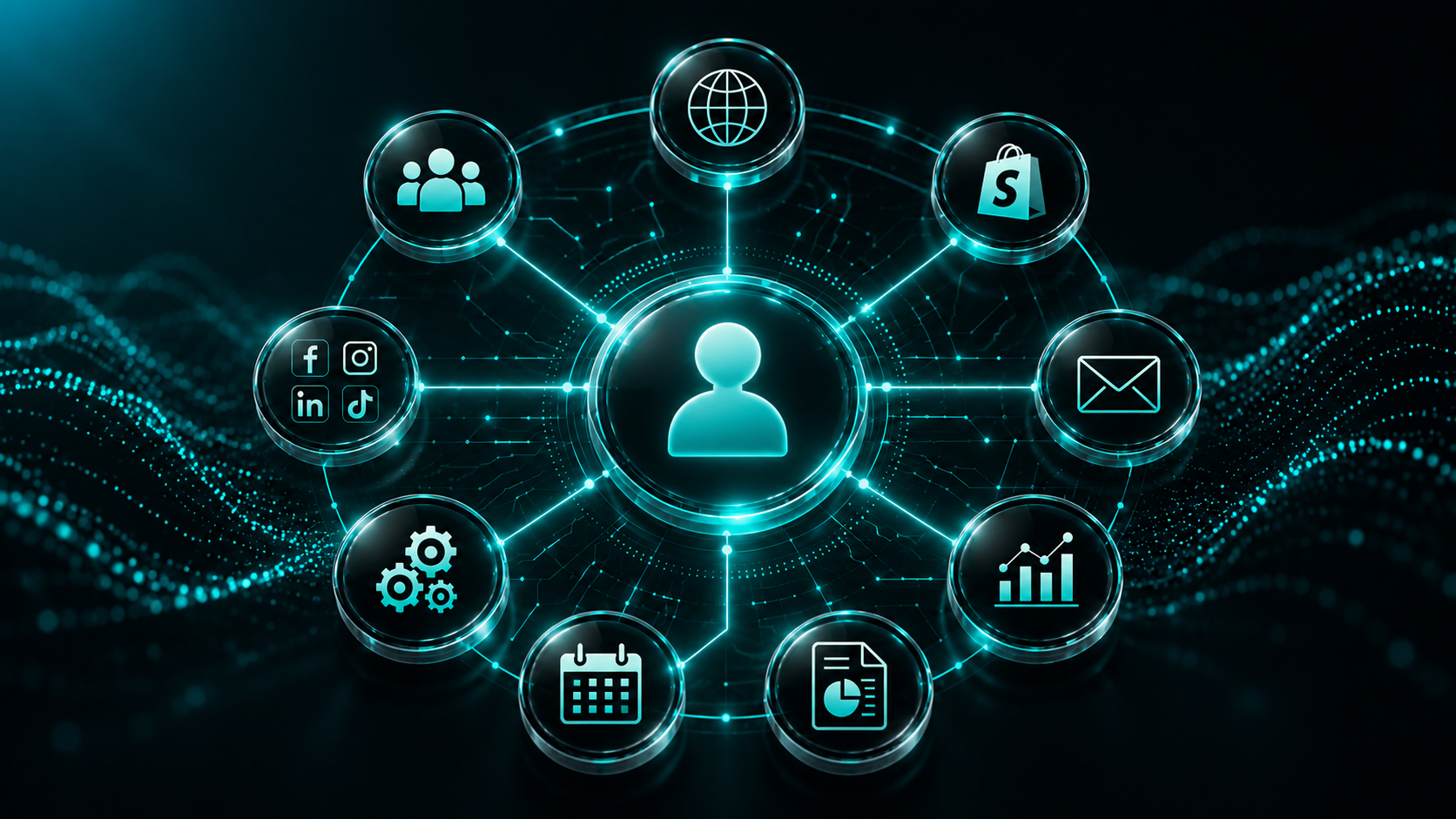
At Tier One Solutions, we believe technology should function as a complete ecosystem where people, processes, and technology are connected around the customer journey.
A Complete Ecosystem Starts With the Client
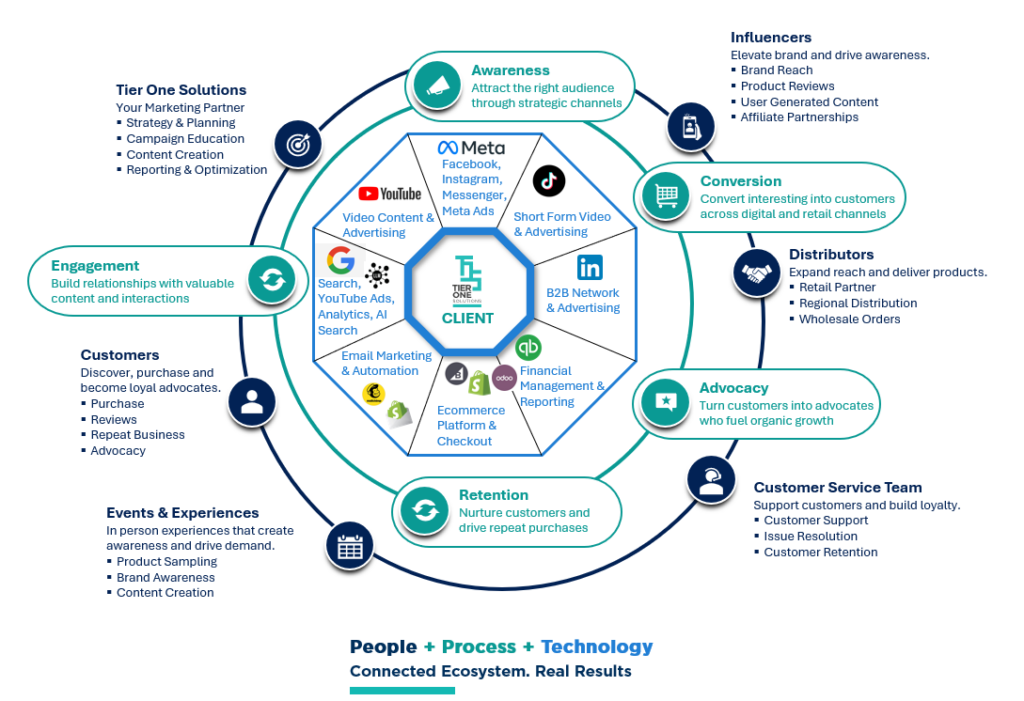
Unlike a traditional technology assessment that focuses on individual platforms, we evaluate how every touchpoint contributes to business growth.
The client sits at the center of the ecosystem.
Around them are the systems responsible for creating awareness, building engagement, converting interest into revenue, and nurturing long-term loyalty.
Each interaction produces valuable information.
Each connected platform creates another opportunity to improve the customer experience.
When these systems communicate effectively, organizations gain something incredibly valuable:
Visibility.
Instead of guessing where customers came from or why they purchased, leadership gains a complete picture of the customer lifecycle.
People + Process + Technology
Technology alone doesn’t create digital transformation.
Successful organizations align three critical components:
People
The employees, customers, partners, distributors, and stakeholders who interact with the business every day.
Without adoption, even the best software becomes shelfware.
Process
The repeatable workflows that move information throughout the organization.
Good technology amplifies good processes.
Poor processes simply become automated inefficiencies.
Technology
The platforms that support those processes.
CRM.
Marketing automation.
eCommerce Platform (Shopify, BigCommerce, Odoo).
Analytics.
Email.
Registration.
Reporting.
Business intelligence.
Each serves a purpose, but only when connected do they begin creating exponential value.
Every Stage of the Customer Journey Matters
Our ecosystem framework is built around the complete customer lifecycle.
Awareness
How do potential customers first discover your organization?
This may include:
- Google Search
- Meta Advertising
- YouTube
- Events
- Influencer partnerships
- Public relations
- Organic social media
Each channel should feed measurable data back into your ecosystem.
Without attribution, marketing becomes guesswork.
Engagement
Once awareness is established, organizations need meaningful interactions.
This includes:
- Educational content
- Email marketing
- Social engagement
- Product information
- Videos
- Community building
Engagement builds trust before asking customers to make a purchase.
Conversion
The customer decides to act.
Whether purchasing online, registering for an event, requesting a proposal, or becoming a member, the experience should be frictionless.
This is where platforms like Shopify, registration systems, CRM integrations, and payment processing become critical.
Every unnecessary step reduces conversion.
Retention
The customer journey doesn’t end after a transaction.
Organizations often overlook opportunities to:
- Recommend additional products
- Invite customers back
- Encourage referrals
- Deliver educational content
- Build long-term relationships
Retention is frequently the highest ROI marketing investment an organization can make.
Advocacy
The strongest organizations don’t simply create customers.
They create advocates.
Satisfied customers become:
- Review writers
- Referral sources
- Brand ambassadors
- Repeat buyers
- Community builders
Technology should make advocacy easy.
The Ecosystem Extends Beyond Marketing
One aspect often overlooked is that customers aren’t the only participants in a healthy ecosystem.
Our framework also considers:
Influencers
Generating awareness and expanding reach.
Distributors
Helping products reach new markets.
Customer Service Teams
Supporting customers long after the sale.
Events & Experiences
Creating memorable interactions that strengthen relationships.
Each participant contributes valuable information that should flow back into the ecosystem.
Technology Assessments Should Focus on Connections
One of the most common discoveries during our assessments isn’t outdated software.
It’s disconnected software.
We frequently identify situations where organizations already own excellent technology but aren’t maximizing its value because platforms operate independently.
Examples include:
- CRM disconnected from website
- Shopify isolated from email marketing
- Registration systems with no automation
- Analytics missing conversion tracking
- Social campaigns without attribution
- Customer data stored across multiple platforms
These gaps create manual work, inconsistent customer experiences, and limited visibility for leadership.
From Disconnected Platforms to Connected Growth
Our Technology Ecosystem Assessments evaluate far more than software.
We examine how information moves throughout the organization.
We identify opportunities to:
- Improve customer experience
- Eliminate manual processes
- Increase operational efficiency
- Strengthen reporting
- Connect marketing attribution
- Build scalable automation
- Improve decision-making
Rather than recommending more software, we focus on helping existing investments work together.
Technology Should Create Momentum
When people, processes, and technology are aligned, organizations become more agile, more efficient, and more customer-centric.
Marketing becomes measurable.
Sales become predictable.
Customer experiences become consistent.
Leadership gains confidence through data rather than assumptions.
Technology stops being a collection of disconnected tools and becomes a strategic asset that drives growth.
That’s the power of a connected ecosystem.